Shredding the Moral Fabric of Our Nation
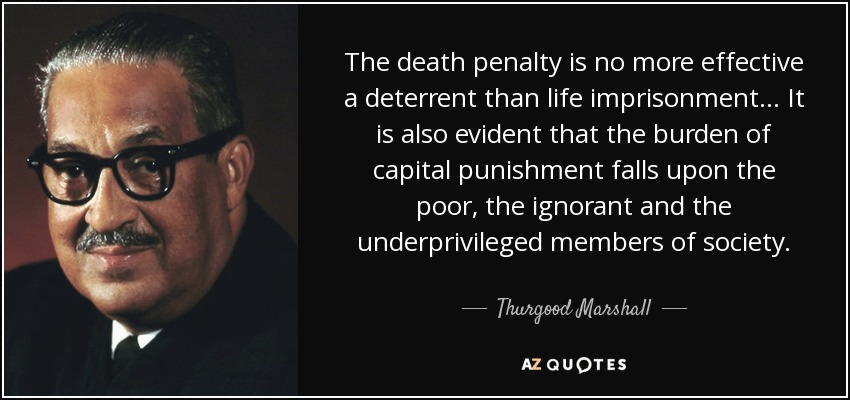
The current political administration in the United States seems to have an insatiable hunger for spectacles that, too often, involved bloodshed and death. From the War on Iran that included bombing a school where more than 100 young girls perished, to ICE agents wantonly and with malice shooting and sometimes killing people on the streets of our major cities, to the less-lethal but nonetheless distasteful spectacle of a fistfight on the White House lawn to “celebrate” the nation’s 250th birthday, our leaders appear eager to reinforce their power through cruel, brutal displays of physical harm to others.
Now comes, if possible, an even cruder, more savage idea that more rational people pray will never come to fruition: a declaration of an intent to livestream for all the world to see the execution by firing squad of Nidal Hasan. What kind of leaders think it appropriate to make a show, a form of entertainment, out of the official killing of a human being? Leaders who have clearly smashed whatever remained of their already-damaged moral compass.
Yes, to be clear, Nidal Hasan committed a terrible, horrific crime. He is a self-proclaimed terrorist who shot and killed 13 people and injured 32 at Fort Hood, Texas, in 2009. He admitted the crime, was convicted by a military jury of all charges, and sentenced to death in 2013. A lengthy mandatory appeals process ensued until this month when the Pentagon confirmed the death sentence would be carried out by firing squad in December.
While there is no justification for Hasan’s murderous rampage, the issue of the morality of the death penalty continues to be a serious matter of debate and concern. The Catholic Church has long questioned the death penalty, and in 2018 Pope Francis I specifically amended the Catechism of the Catholic Church to prohibit the death penalty as an offense against human life. This is the specific passage from the Catechism:
Capital Punishment
2266 The State’s effort to contain the spread of behaviors injurious to human rights and the fundamental rules of civil coexistence corresponds to the requirement of watching over the common good. Legitimate public authority has the right and duty to inflict penalties commensurate with the gravity of the crime. the primary scope of the penalty is to redress the disorder caused by the offense. When his punishment is voluntarily accepted by the offender, it takes on the value of expiation. Moreover, punishment, in addition to preserving public order and the safety of persons, has a medicinal scope: as far as possible it should contribute to the correction of the offender.67
2267 Recourse to the death penalty on the part of legitimate authority, following a fair trial, was long considered an appropriate response to the gravity of certain crimes and an acceptable, albeit extreme, means of safeguarding the common good.
Today, however, there is an increasing awareness that the dignity of the person is not lost even after the commission of very serious crimes. In addition, a new understanding has emerged of the significance of penal sanctions imposed by the state. Lastly, more effective systems of detention have been developed, which ensure the due protection of citizens but, at the same time, do not definitively deprive the guilty of the possibility of redemption.
Consequently, the Church teaches, in the light of the Gospel, that “the death penalty is inadmissible because it is an attack on the inviolability and dignity of the person”, [Francis, Address to Participants in the Meeting organized by the Pontifical Council for the Promotion of the New Evangelization, 11 October 2017] and she works with determination for its abolition worldwide.
This section of the Catechism goes on to address other life issues including abortion and euthanasia, both of which are strictly forbidden in Catholic teaching. By including the death penalty, the Church took an important step toward reinforcing the dignity of all human life.
Pope Leo XIV reinforced this teaching on October 10, the World Day Against the Death Penalty, when he wrote on X (Twitter to us old folk…):
“The death penalty is inadmissible because it is an attack on the inviolability and dignity of the person. The common good can be safeguarded and the requirements of justice can be met without recourse to capital punishment: effective systems of detention have been developed that protect citizens while at the same time do not completely deprive those who are guilty of the possibility of redemption. #NoDeathPenalty”
The impending execution of Nidal Hasan might never have reached headlines, however, but for the pronouncement by Secretary of Defense (or, as he prefers, War) Pete Hegseth that the execution would be “public,” and then the Pentagon announced that “public” means livestreamed for all the world to watch. That announcement brought an immediate and furious response from many religious, political and public leaders, including Archbishop Paul S. Coakley, president of the U.S. Conference of Catholic Bishops, who issued the following statement sharply condemning the decision of the U.S. government:
“It is with shock and great sorrow that I have learned of the Department of War’s decision to publicly livestream the execution of Nidal Hasan. Our God is the God of life. In no way can Hassan’s actions be condoned but this decision is a barbaric promotion of a culture of death and must be reconsidered. The word of God exhorts us: ‘do not repay anyone evil for evil’ (Romans 12:17). The public execution even of one who has done grave harm will only further undermine the moral fabric of our nation and be a blight on the conscience of its people.
“I pray for the intercession of Our Lady of Good Counsel that we as a nation may always choose life even in the most trying times and circumstances.”
The backlash to the announcement of the livestream has grown in the last few days, including many major religious organizations and politicians on both sides of the aisle. Even those who are advocates for the death penalty are drawing the line on the public spectacle.
Another case also fuels the national debate: the “botched execution” of Christa Pike in Tennessee. Pike was sentenced to death for murdering her classmate 30 years ago. But when the execution was underway, despite numerous efforts to inject her with a fatal dose of pentobarbital, she did not die. She was hospitalized, recovered, and is now back in prison while debate rages about whether her sentence should be commuted or whether she should go through the execution once more.
Archbishop Coakley was right to decry the harm to the moral fabric of our nation that the potential livestream of Hassan’s execution would impose. More to the point, the existence of the death penalty at all in this day and age is a tear in that fabric that we must mend before the fabric shreds entirely. Our bloodthirsty culture needs more rationality, fewer spectacles of blood and gore. We need more voices promoting an end to violence, rather than supporting state-sponsored violence. No death penalty ever stopped subsequent murders. Those who would harm others learn nothing from public spectacles, and in fact, may find them weirdly incentivizing to commit mayhem as we know from the tales of many mass shooters who crave fame.
Justice will not come until we find a way to achieve peace in this nation. Our moral duty is to work for an end to violence in all forms, including official violence.
