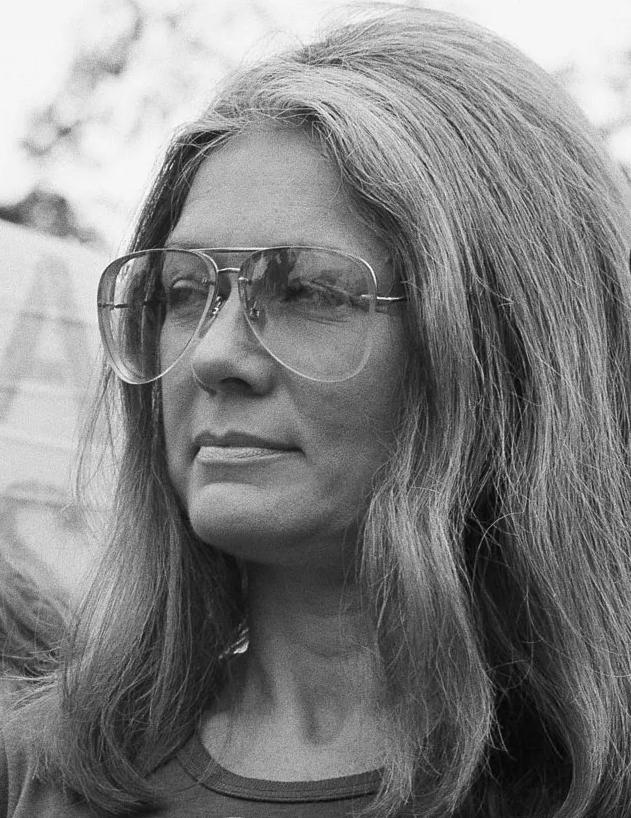
Gloria Steinem: A Warrior Who Changed the World

In the 1970’s, we Trinity Women were fortunate to be in the second or third wave of a movement for women’s rights and equality not only in the United States but globally. Inheritors of a drive for women’s equality famous for foremothers like Susan B. Anthony and Elizabeth Cady Stanton and leaders of the Women’s Suffrage movement, we knew that we still faced considerable odds to advance into positions of power in our society. Women were just about 25% of my class at Georgetown Law in 1974; no woman had yet served on the Supreme Court, women judges were few, and women in law firms rare. Women were even more scarce in medicine and other professions; women were rare in the Senate, House and state legislatures, largely absent from governors’ mansions, and not at all on lists of CEOs for the Fortune 500.
We Trinity Women of the latter quarter of the 20th Century wanted more, and we chose a great women’s college to instill in us the knowledge and abilities we needed to ascend to women’s leadership in a world where we knew we would face rampant sex discrimination. But we needed something or someone else: an inspiring leader, an icon we could admire and even, perhaps, emulate. A number of courageous, determined, brilliant women emerged in the mid-20th Century as leaders of the women’s movement — Shirley Chisolm, Betty Friedan, Bella Abzug —and perhaps the most famous and prominent among them was Gloria Steinem, a powerful champion for women’s rights, a master communicator and advocate for equality and justice. Gloria died this week, but her legacy lives strong in the lives of millions of women whose advancement in the workplace, politics and society is due in large part to her lifetime advocacy for women’s rights.
Among many achievements for women, Gloria founded MS Magazine in 1972, a landmark moment in journalism and the literature of women’s rights. Among the many young women attracted to her amazing new magazine was Trinity Alumna Cathie Black, Class of 1966, also emerging as an exemplary leader in her own right in publishing and the news business. Cathie joined MS as an advertising manager, a challenging job since she had to convince the largely-male world of business decision-makers to pay for advertising in this new magazine that was not a typical “women’s magazine” but rather a statement about advocacy for women’s rights and equality.
I asked Cathie to share some of her memories of Gloria Steinem, and she wrote:
“Gloria Steinem was my first role model when I was a young woman in the seventies and on the advertising staff at Ms. Magazine. We would ask Gloria to go on adverting appointments with us in the hope that she would convince the advertisers (then mostly all men) to take a page in the magazine.
“Ms. was a very hard sell but in time her thoughtful presentations broke the ice and we finally started getting advertising.
“Gloria was a warrior who changed the world for the better for men and women.
“I am honored to have known her.”
Cathie Black’s amazing career aptly illustrates the vision and power of Gloria Steinem’s work for women’s equality. After MS Cathie became the publisher of New York Magazine; then on to serve as president and publisher of USA Today and a vice president of the parent company Gannett; later president and CEO of the Newspaper Association of America; and then becoming president and later chairman of Hearst Magazines. Like Gloria Steinem, Cathie has always “lifted as she climbed,” inspiring the next generation of women to achieve even more has always been part of her own work. I had the privilege of working with Cathie on Trinity’s Board of Trustees in the late 1980’s when Trinity was struggling in a rapidly changing collegiate world, and her strategic insights and clarity about our mission were instrumental in moving Trinity forward.
Today’s Trinity Women reap many benefits from the persistence and courage of the amazing trailblazers for women’s advancement. In addition to a role model like Cathie Black, we find inspiration and so much affirmation in the iconic leadership of Nancy Pelosi ’62, the first and only woman to be Speaker of the House; Kathleen Sebelius ’70 who was the first woman governor of Kansas and later Secretary of Health and Human Services; and more recent women leaders like Tekedra Mawakana ’93, co-CEO of Waymo; and Beatrice Peterson ’12, award-winning journalist with ABC News, just a few among so many examples of Trinity women’s leadership.
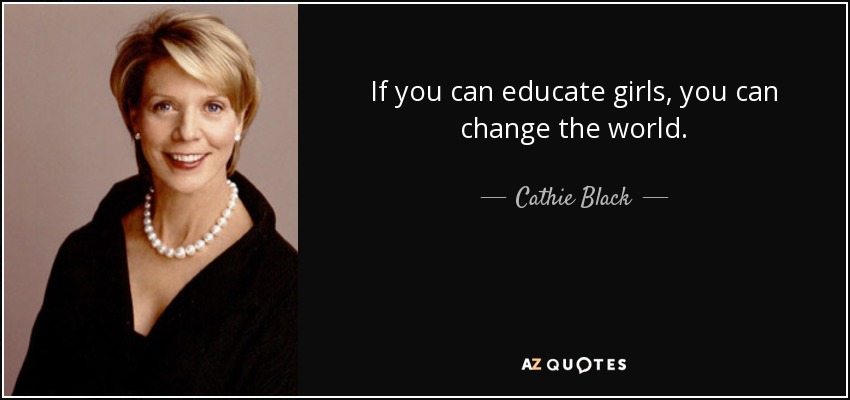
People sometimes ask me why Trinity persists in sustaining our undergraduate women’s college in the modern world where coeducation is the norm throughout higher education. My response is simple: true equality remains elusive for millions of women in America and globally, and those of us who have received so many gifts of education and opportunity have an obligation to make them even more accessible to the rising generations.
We know that the contemporary climate for women’s equality is under a great deal of stress in this era where the political world opposes any mention of programs that promote diversity, equity and inclusion. We also know that women of color suffer even more discrimination due to race as well as gender, and women of color are now the majority of students at Trinity. Trinity is one of just about 30 remaining women’s colleges that truly believe in the power of education to change the lives of girls and women, and thereby to change the futures and fortunes of their children and families. For 130 years, the achievements of Trinity graduates have proven the truth of Cathie Black’s statement, often echoed by many leaders, that the education of girls and women is the most powerful tool we have to change society for the better.
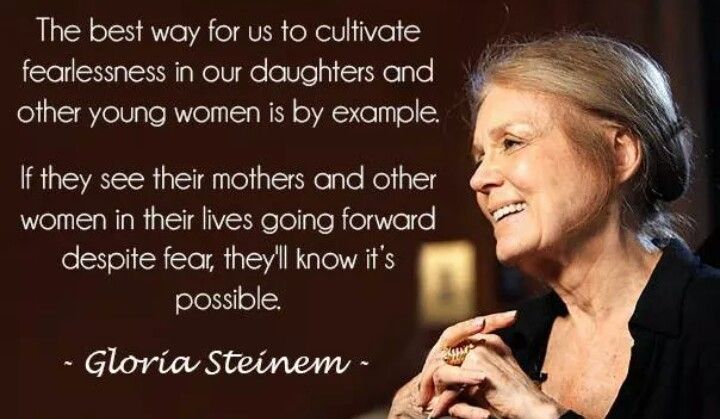
We remember Gloria Steinem with gratitude and appreciation for the countless doors she opened for all of us. And we salute and thank the Trinity Alumnae who are trailblazers in their own right, women who continue to educate the future generations of women leaders through the power of their example, persistence and courage, and their selfless generosity of to alma mater.
