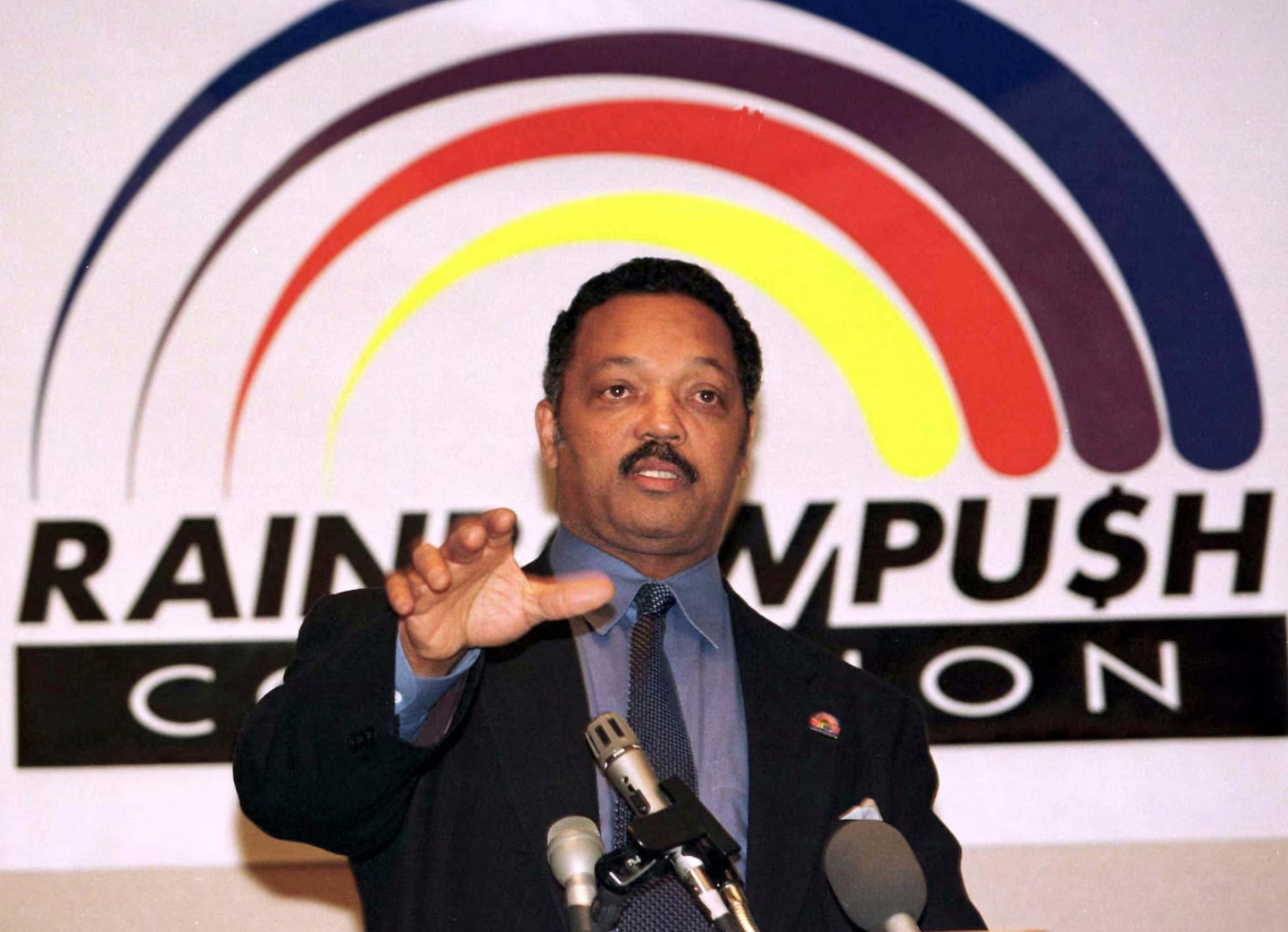
Rev. Jesse Jackson: Remember, then Resolve to Act
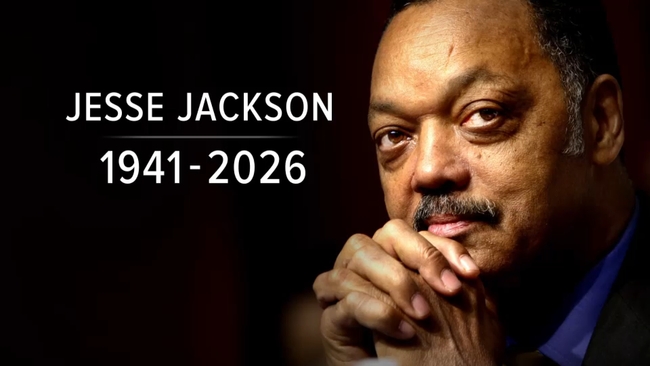
The outpouring of remembrance and tribute to the Reverend Jesse L. Jackson upon his death last week at age 84 was reverent, expansive, and tinged with a sense of bitter wistfulness for a time not so long ago when advocacy for civil rights and equal opportunity had his loud, strong and affirming voice, inspiring many others to stand up and march for the cause of racial justice. As I watched and read the many glorious and heartfelt tributes, I could not help but feel a real sense of loss not simply for this one great leader vanishing from our midst, but perhaps even more intensely, for the loss of courageous leadership and clear direction for the continuing struggle for civil and human rights in this nation as well as globally.
Heir to the mantle of the Reverend Dr. Martin Luther King, Jr., Jesse Jackson was the last of the great leaders bridging the pre-and-post-eras of the Civil Rights Movement from the 1960s to today. While there are still many strong Black champions of justice and equal opportunity, their voices often seem muted and muffled in the cacophony of this nation’s sharp turn to the right, led by a loud and raucous political marching band whose drums sound a message of retreat, revision and rolling back to a time before the hard-won gains of the Civil Rights Movement.
The most shocking part of the current era is the ways in which white supremacy is mis-appropriating the language and laws of civil rights, claiming, for example, that White men are the ones suffering discrimination, that DEI practices are harmful rather than essential to building peaceful communities, that the playing fields for entrance to college or professions are all perfectly equal when they are not. Almost as shocking, however, is the fact that there has not been a loud, courageous, compelling response to these current assaults on civil rights, and instead, too many leaders seem to be turning away from any confrontation, hiding under their desks hoping against hope that the authoritarian wave will eventually go away.
Jesse Jackson, afflicted with the debilitating effects of Parkinson’s that eventually took his life, could no longer lead the fight. There are leaders around the country who are rising in the political sphere, but no clear successor. Certainly the Reverend Al Sharpton is one of the most prominent current leaders, but we also need to develop a new generation. Former Vice President Kamala Harris fought a good fight as a presidential candidate but has been undermined by many in her own party. Governor Wes Moore of Maryland, the only Black governor among the 50 states, has spoken eloquently in recent weeks after the current president trashed him while disinviting him from a dinner for governors at the White House. “You do not determine my worthiness,” Moore declared, also saying, “I will bow down to no one.” Senator Cory Booker, Senator Angela Alsobrooks and Representative Jamine Crockett are promising rising leaders, and Stacey Abrams remains an important voice. But who will truly be able to take up the national cause to restore civil rights and justice in this nation?
As we look to the future, we also must realize that this new age requires more education for the rising generations. A student wrote to me last week that she had not heard of Jesse Jackson before the news of his death. While startled, I realized that our youngest students were born in the last two decades, times well past the Civil Rights Movement of the 20th Century, times more recently characterized by economic stress, pandemic and rising authoritarianism. We educators have huge challenges to acquaint rising generations with not only the knowledge but also the know-how to tackle civil and human rights threats in the current political climate.
I asked members of the Trinity community to share their thoughts about Reverend Jackson, and here are their responses:
Tiara Johnson, SPS Student in Business Administration:
“I had the immense privilege to meet Jesse Jackson when I was just a baby, shortly after he announced his presidential candidacy in 1988. During a campaign event in Washington, DC, my mother held me as he moved through the crowd and briefly picked me up and kissed me. Although I do not remember the moment, I now understand its significance. His campaign represented hope and possibility, and that encounter reminds me that I was present during a historic movement for change and opportunity.”
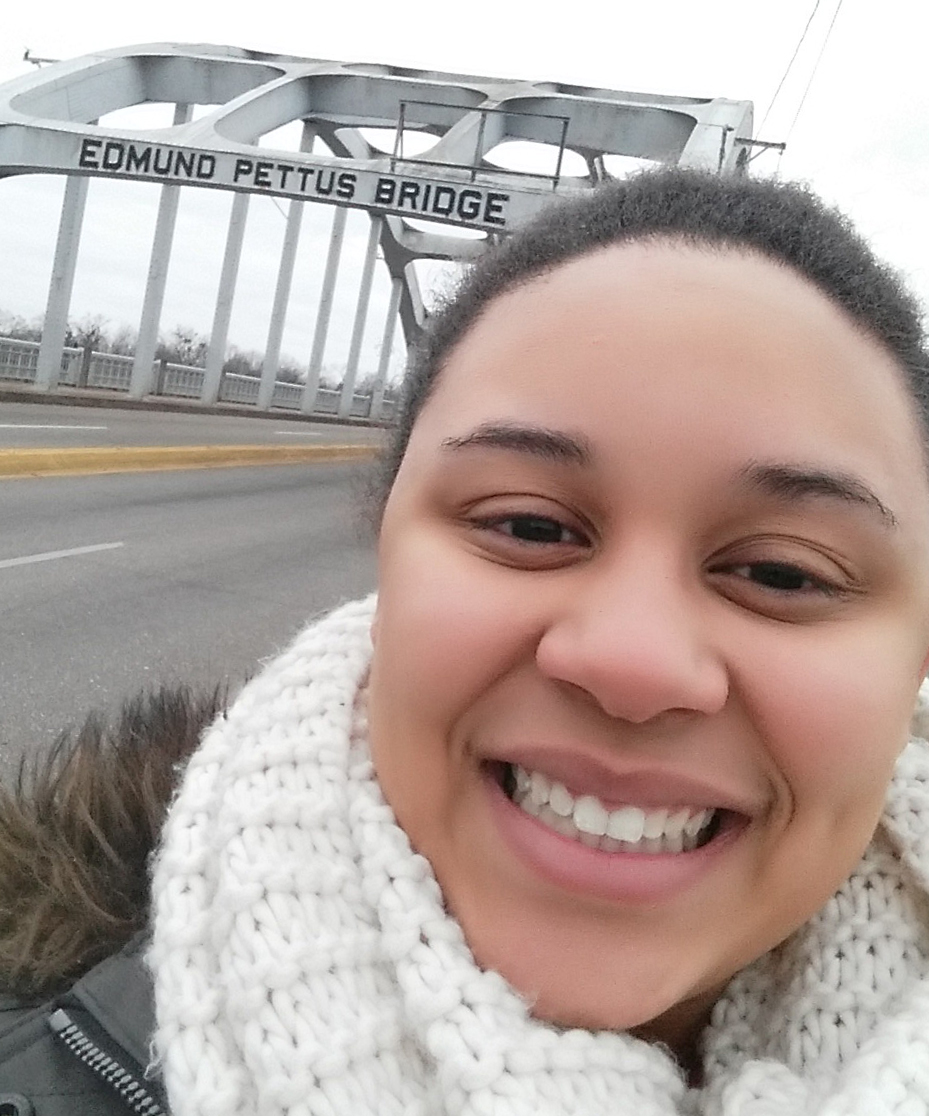
Anna Roland ’16
Director of Alumnae/i Affairs:
“Growing up, I knew Rev. Jesse Jackson was a significant figure in Civil Rights history, but I truly grasped the impact of Rev. Jesse Jackson’s legacy during Trinity’s Spring mission trip to Selma, Alabama. Standing on the Edmund Pettus Bridge and hearing firsthand accounts of “Bloody Sunday” from community members gave me a deeper understanding of the courage and conviction it took for leaders, like him, to stand firm in the face of injustice and demand change.”
Dr. Patrice Moss, Professor of Biochemistry:
“…my father in love said this and I think it sums up exactly what I feel… “You served us well Rev. Jackson. Now take your rest in glory!!” Rev. Jackson’s life is reflected in 2 Tim 4:7-8 “I have fought the good fight, I have finished the race, and I have remained faithful. And now the prize awaits me—the crown of righteousness, which the Lord, the righteous Judge, will give me on the day of his return. And the prize is not just for me but for all who eagerly look forward to his appearing.” Thank you for honoring this great man of God!
Dr. Lisa Simmons, Program Director for the Masters in Occupational Therapy:
“I was saddened to hear about Rev Jesse Jackson’s passing. In college, I went to hear him speak and it was the first time I registered to vote. I registered to vote in Alabama based on that speech. I am PROUD to say I voted in 2000 to legalize interracial marriage in the state of Alabama. Sad that it took that long to legalize it, and so happy Rev Jackson came to Tuskegee University and mobilized us to remove an injustice.”
Evelyn Alobwede ’28, CAS Student:
“…learning about his death it made me think of how he made every moment count. Let us never forget him and all the others came before him.”
Dr. Raena Barnes, Assistant Professor of Nursing:
“I had the great honor of meeting him when he was running for president ( our office was located next to CNN) He was very personable and very kind to all of us- our office was evacuated for a fire drill and he made a point to see that we were all ok.”
Dr. Stephen Thorne, Distinguished Professor of Education, reminds us of Rev. Jackson’s famous and beloved affirmation poem:
I am Somebody!
I may be poor,
But I am Somebody.
I may be young,
But I am Somebody.
I may be on welfare,
But I am Somebody.
I may be small,
But I am Somebody.
I may have made mistakes,
But I am Somebody.
My clothes are different,
My face is different,
My hair is different,
But I am Somebody.
I am black,
Brown,or white.
I speak a different language
But I must be respected,
Protected,
Never rejected.
I am God’s child!
Watch Rev. Jackson on Sesame Street
Read this great tribute to Reverend Jackson by Associate Dean Jamal Watson:
The Dreamer Who Would Not Wait: Reverend Jesse Jackson and the Unfinished Work of Access
1 Comment

I am curious as to why you didnt mention in your blog other politicians such as marco rubio tim.scott and ben carson. Dont you think they should be mentioned as well?