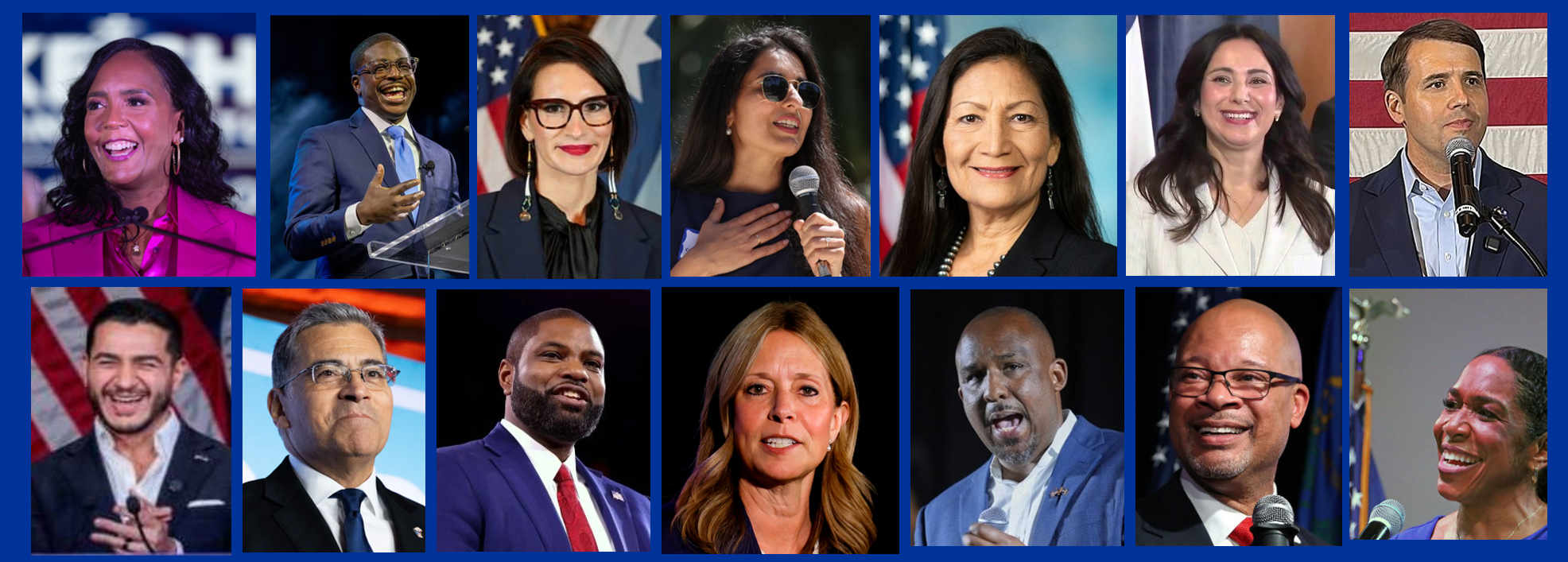
D.E.I. Triumphant
First Black Woman Governor in U.S. History – Georgia
– Keisha Lance Bottoms, Georgia
First Black Governors of Florida, Wisconsin and Nevada
– Byron Donalds, Florida
– David Crowley, Wisconsin
– Aaron Ford, Nevada
First Latina Governor of Texas
– Gina Hinjosa, Texas
First Latino Governor of California
– Xavier Becerra, California
First Native American Governor in U.S. History – New Mexico
– Deb Haaland, New Mexico
First Black Senator Since Reconstruction in Mississippi
– Scott Colom, Mississippi
First Openly Gay Senator – New Hampshire
– Chris Pappas, New Hampshire
First Muslim Senator – Michigan
– Abdul el Sayed, Michigan
…. and the list of “firsts” among officials elected in the 2026 mid-terms gets even longer among state offices. The evidence is clear: the 2026 elections were a triumph for decades of practices to ensure diversity, equity and inclusion in American society.
Wait. Wasn’t D.E.I. outlawed by the current political administration? If that’s true, what shall we call this impressive wave of elected officials from a spectrum of racial, cultural, ethnic and social backgrounds?
Maybe we should just call it Simple Justice. Maybe we can simply say it’s the fruit of Democracy at Work.
And let’s also say this: the administration’s relentless effort to stamp out diversity, equity and inclusion programs and sensitivities is rooted in a perverse interpretation of the nation’s civil rights laws that were created specifically to ensure equal rights and opportunities for people who have historically suffered extreme forms of discrimination, marginalization and oppression at the hands of those who have held most of the power for most of U.S. history.
The exclusion of persons from positions of power and influence on the basis of their race, gender, nationality, language, religion, economic status and other personal characteristics has been well documented across the 300-year sweep of American history. That exclusion raised up barriers to educational advancement, voting rights, employment opportunities, housing patterns, wealth creation, healthcare access, and other benefits that support advancing in American society. Those barriers prevented African Americans, Latinos, women, Muslims, persons with disabilities, gay and lesbian individuals, and others from advancing into positions of power, wealth and influence in American life.
The Civil Rights movement of the 20th Century was a success to the extent that it led to changes in discriminatory laws and policies. But the law cannot change hearts and minds, and so the development of educational practices to teach rising generations how to form a good society amid increasingly great diversity became necessary — the development we came to know as Diversity, Equity and Inclusion practices, or D.E.I.
But while the latter part of the 20th Century was a time of rising concern with civil rights and equal opportunity for all, the first quarter of the 21st Century has been a time of corrosive reaction to those gains, rising resentment against persons of color, women and others suspected of being agents to displace what some claim as the rights of the white population, particularly white men who have traditionally been at the apex of the social and power structures. The inexorable force of demographics is frightening to many; the prediction that by 2050 there will no longer be a white majority is fast becoming a reality, a force driving ever more ardent reaction against the whole idea of diversity. But sociology happens, and no political edict can stop the inevitable.
Educational programs designed to teach rising generations how to respect difference, build communities together, share workplaces and contribute to the common good are not only NOT illegal, they are, in fact, essential to a peaceful and productive society. No court has ruled against such programs. The oft-cited Supreme Court ruling in the case involving Harvard admissions (Students for Fair Admissions v. Harvard) did not reject D.E.I. but instead, was about a specific race-based affirmative action formula for admission to one of the nation’s most elite universities, a formula the Court found illegal. Prior to that ruling in 2023, for nearly all of the prior half century, the idea of affirmative action to remediate invidious discrimination was legal and even encouraged. Since the Harvard case, the enrollment of Black students at elite universities has declined.
The fact that the current administration has used the Harvard ruling to ban all diversity education programs — and now even threatens the tax exempt status of schools and universities if we have such programs — is a corrupt distortion of the law and a morally repugnant rejection of the need for such programs. Critics of D.E.I., similar to critics of affirmative action, claim that such programs promote less well qualified individuals over those who are more qualified. This contention is simply not supported by the facts. The law and its practice was just the opposite: a legal demand to ensure a level playing field for those who had suffered chronic exclusion from places and positions of power and influence, i.e., African Americans, women, Hispanics, persons with disabilities, persons who might have been LGBTQ or Muslim or otherwise considered “other” in a society historically dominated and ruled by wealthy white men.
Americans of all races and backgrounds will not concede the day to those who want to slam the door shut on equal opportunity for all who are qualified to attend the great universities, to move up the corporate ladder, to live in any place they choose, even to claim the governors’ mansions and Senate seats as their right. On November 3, 2026, American voters resoundingly rejected this administration’s campaign against diversity. Americans of all races, religions, ethnicities and characteristics have learned to grow and thrive in the most diverse society the world has ever known, and will continue to do so. In the 250th year of the great American Experiment, American voters have reminded our government who is in charge. Politicians and political administrations come and go, but We the People remain.
Read more:
The Atlantic: Scott Colom Is Mississippi’s First Black Senator in 150 Years
Forbes: The 2026 Midterms’ Hidden Winner Was Diversity
USA Today: Latino, Black, Muslim, Native: Voters chose diversity in midterm election
Brookings: The 2026 midterm elections showed DEI is alive and well
Time: These 2026 Election-Winners Made History in Their States
1 Comment

Will you vote for marco rubio or nikki haley if they run in 2028?