Artificial Intelligence: Student Perspectives Part I
The Task Force on Artificial Intelligence took a survey of Trinity students in October 2026 to learn more about student use of AI and student opinions on AI. Many thanks to Dr. Rachel Poirier for creating this survey!! We will discuss this survey and other aspects of artificial intelligence at Trinity in Campus Conversations at 4 pm on November 18!
This blog summarizes some of the data highlights of the survey; a second blog later this week will summarize student comments. For prior context, see my October 4 blog, “How Do You Solve a Problem Like Claude?”
158 students responded to the survey from all academic units, illustrated here:
 Of those responding, 53% are CAS students across all grade levels, followed by NHP students at 21% of respondents, EDU students at 12%, PGS students at 7%, and Early College Academy at 6%.
12.5% of respondents indicated majors in the pre-health professions; 11% in Occupational Therapy; 9.7% in Business; 9% in Psychology; 7% in Biology; 7% in the Master’s in Education, with the balance spread across many other majors.
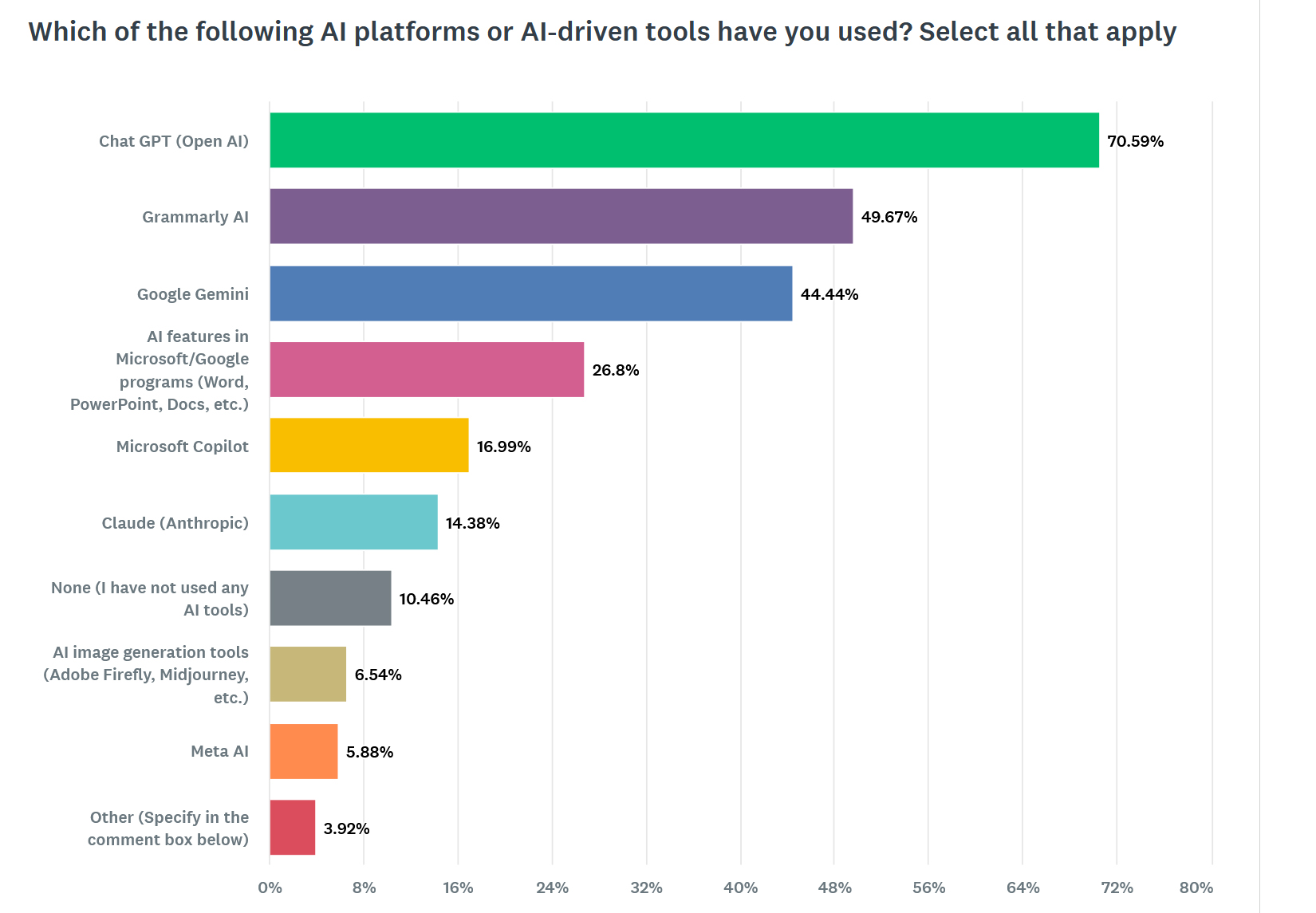
The vast majority of student respondents indicate ChatGPT as their primary AI platform:
Most respondents say they use AI about 1-3 times per week for personal purposes such as planning or solving problems:
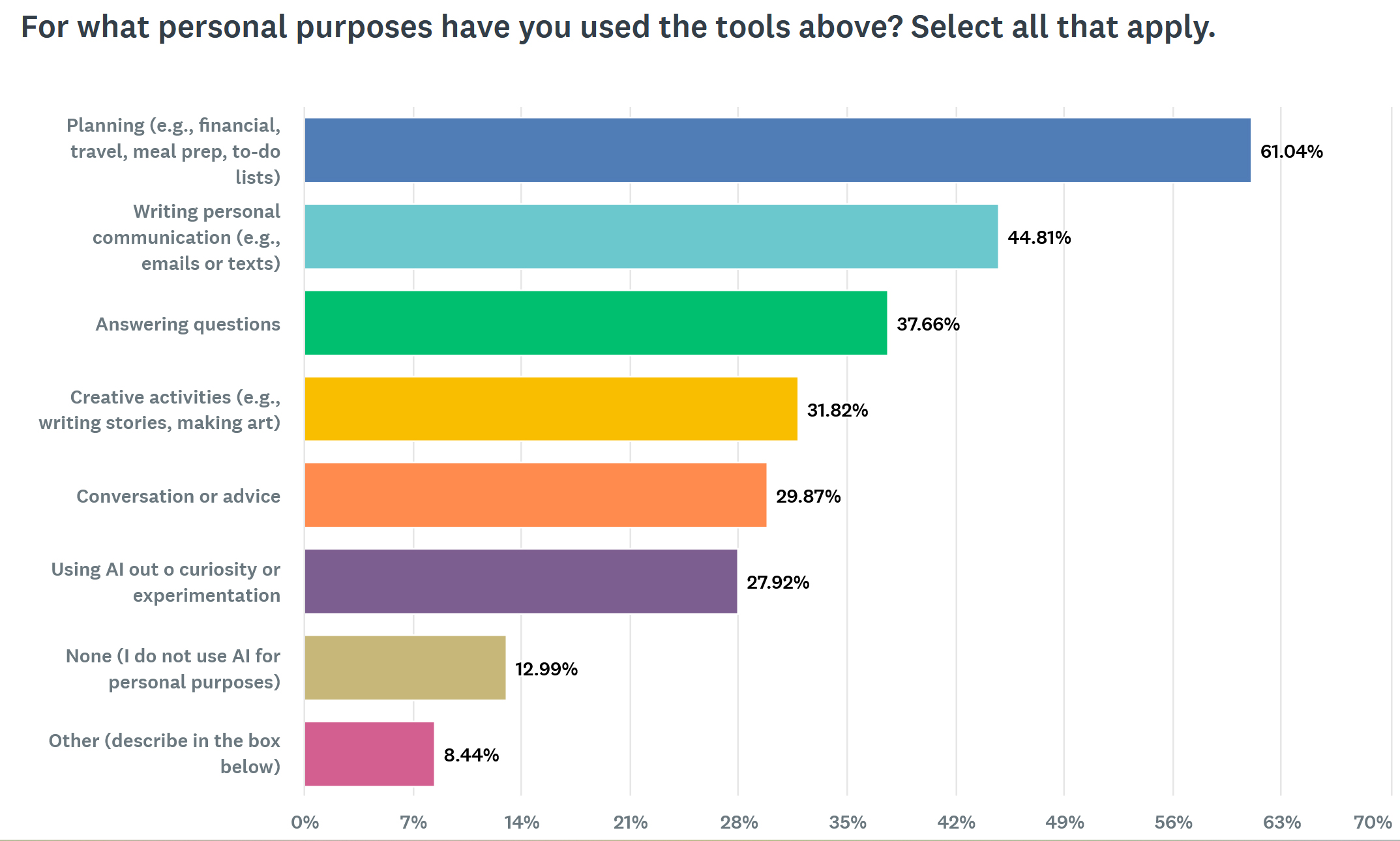
The majority of respondents also use artificial intelligence tools for academic purposes, including:
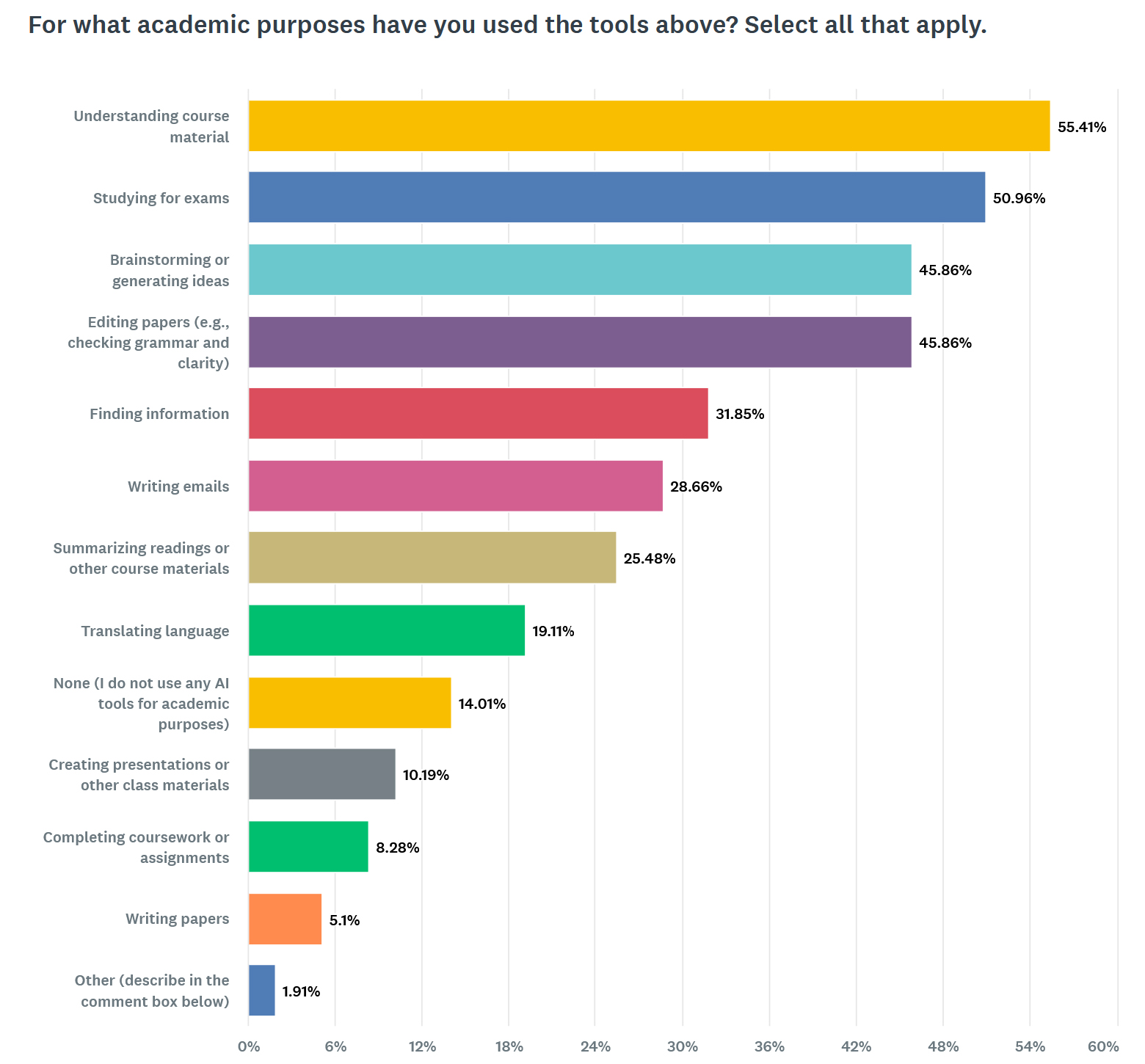
The next question asked students how they used the output when asking AI to help with academics:
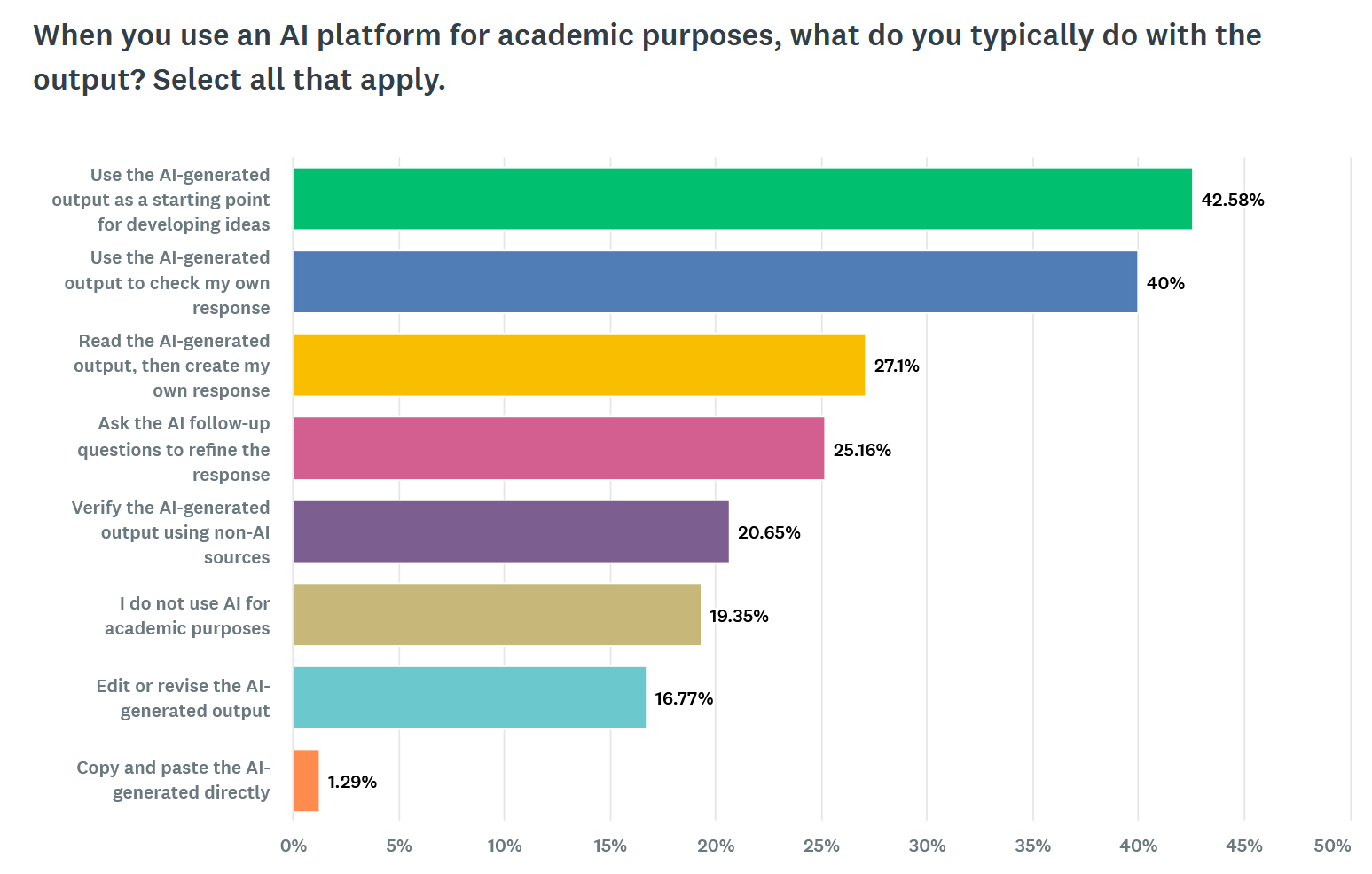
Note that very few students, fewer than 2% of the respondents, say they simply copy and paste the AI output. Most say they use the output to help them develop ideas, check or generate their own responses. Nearly 20% say they do not use AI for academic purposes at all.
The next question offers an interesting insight into student thinking about AI by asking students to answer on a range of agreement (yellow shade) -to-disagreement (red shade) on the statements indicated on the left side:
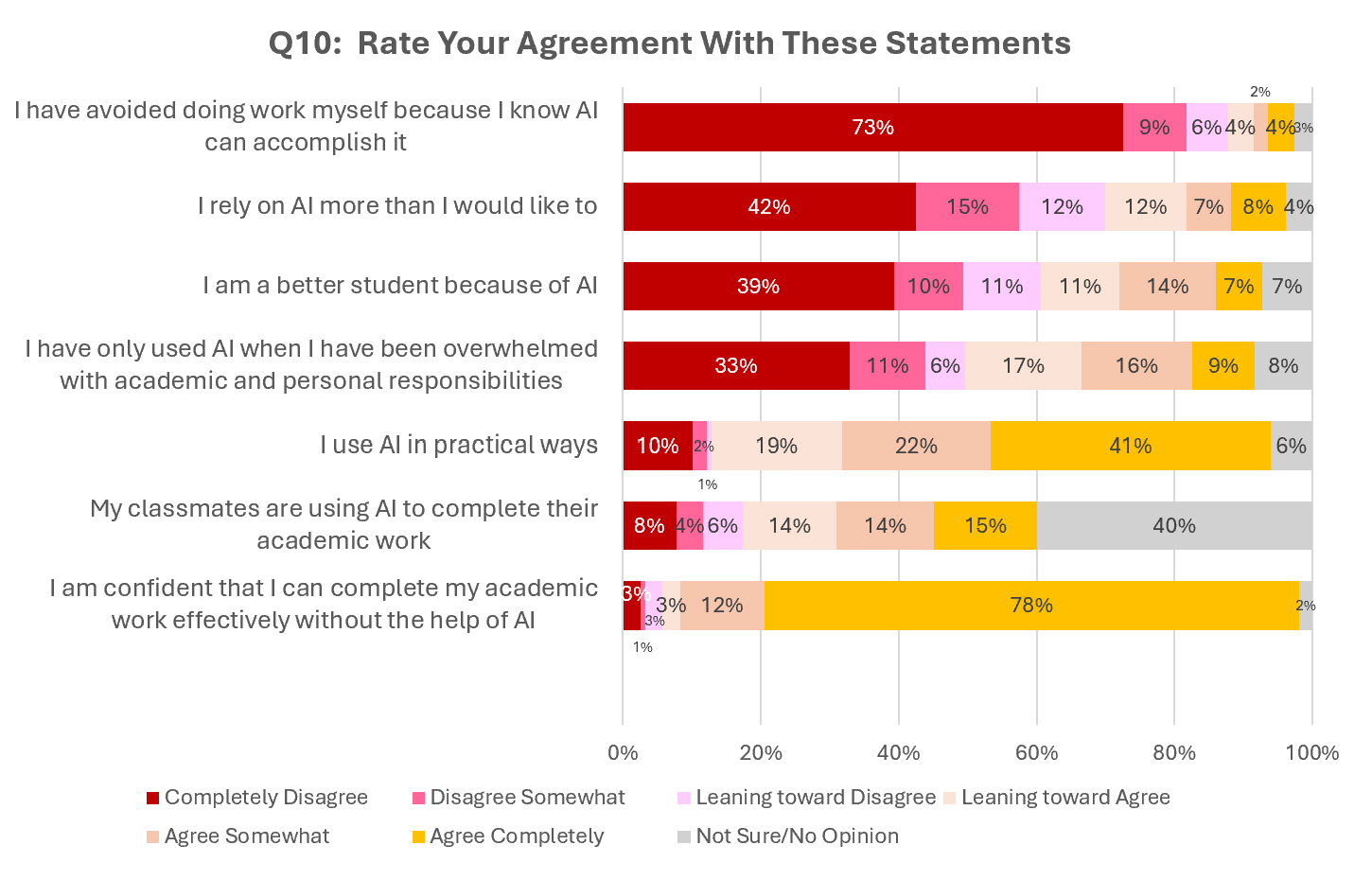
The majority of respondents (total 88%) DISAGREE with the statement that “I have avoided doing work myself because I know AI can accomplish it.” Conversely, the majority (93%) AGREE that, “I am confident that I can complete my academic work effectively without the help of AI.”
In-between those two brackets are a range of opinions revealing that many students (69%) “rely on AI more than I would like to,” and “rely on AI when feeling overwhelmed (50%). Interestingly, many students either don’t know or don’t want to speculate on the question of whether their classmates are using AI.
The next question asked students to rate their AI literacy on a range of topics:
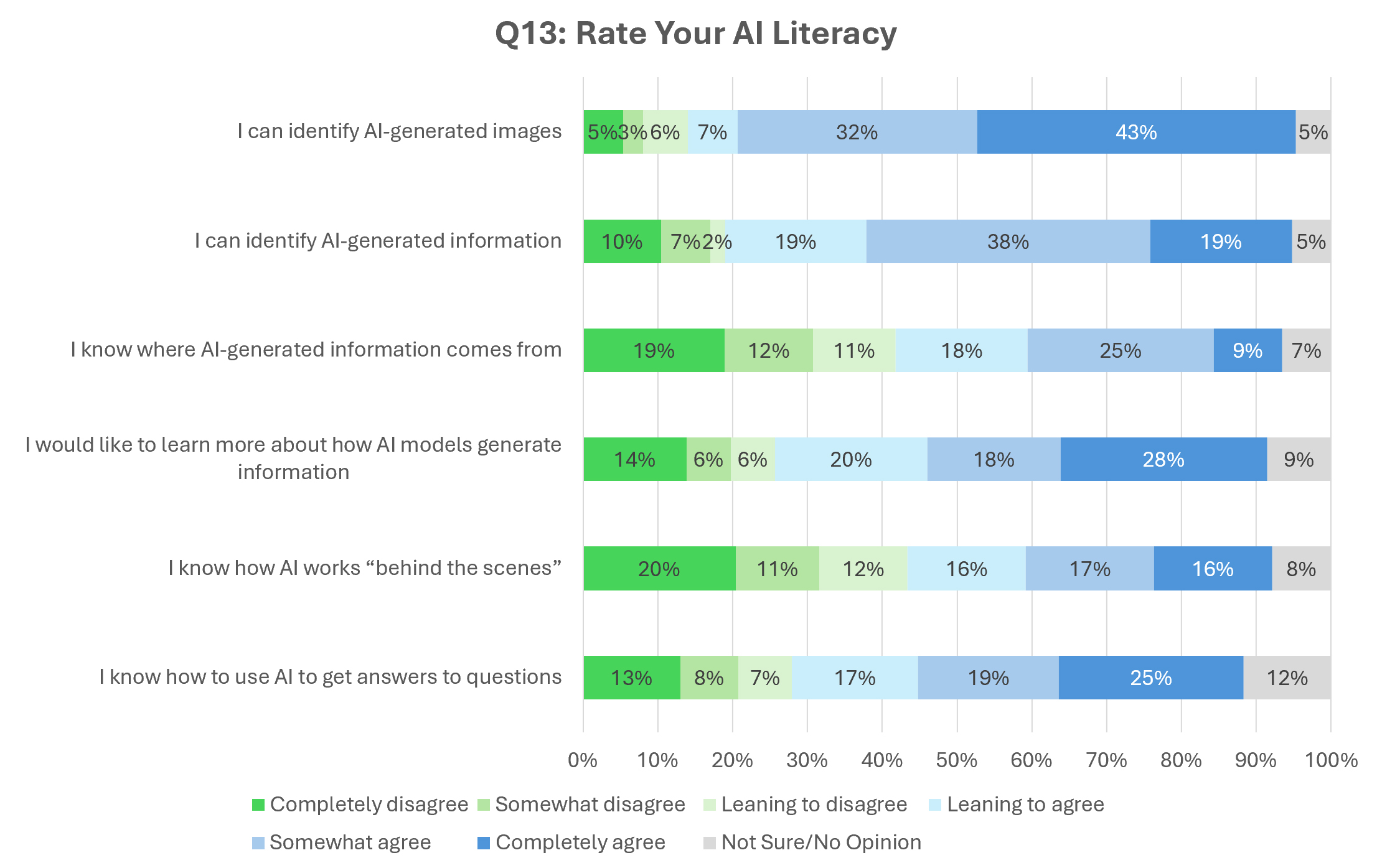
While most respondents say they can recognize AI-generated images and text, many also would like to know a lot more about how AI works. This suggests a very important addition to Trinity’s curriculum to promote information literacy including a deeper understanding of how artificial intelligence gathers and uses information from across the internet.
The next and final question for this blog is perhaps the most important: what are student concerns about AI? The answers are quite stunning:
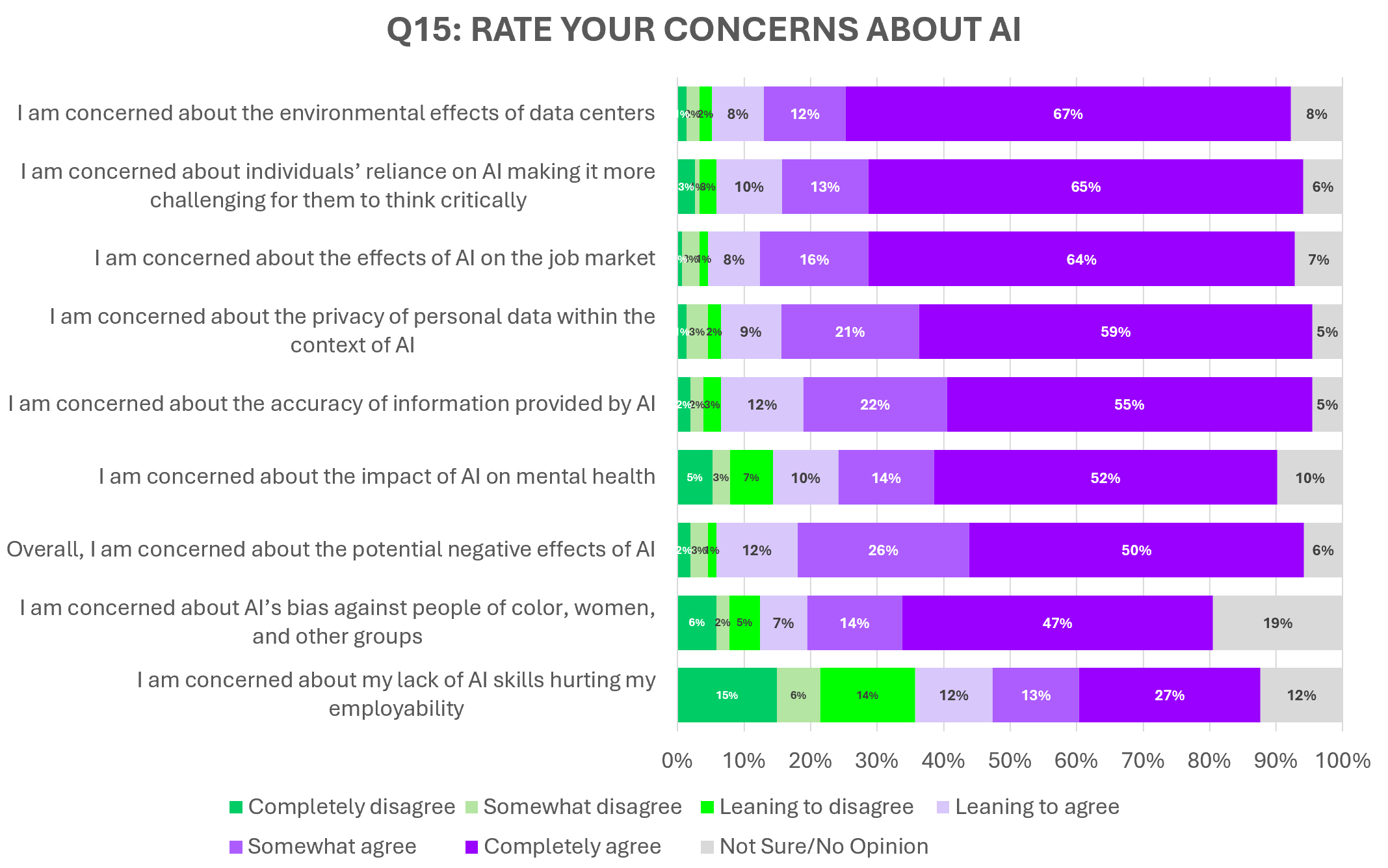
By large margins, students are concerned about the environmental impact of AI and data centers, and equally concerned about the impact of this new technology on critical thinking. Interestingly, while students are also concerned about the impact of AI on the job market, they are least likely to express agreement with the statement about AI hurting their employability.
In my next blog I will provide more student comments on these and related AI questions, and also some very important reflections by students on faculty use of AI in courses.
Thanks to all students for your participation, and thanks to Dr. Poirier for creating a terrific survey!
