Solidarity with Immigrants, a Social Justice Imperative
Hyattsville is a lovely residential community just across the northeast DC line where Michigan Avenue becomes Queens Chapel Road. I’ve lived here for 35 years with wonderful neighbors of all races and ethnicities, shopping at the local stores and dining at the local restaurants, enjoying peaceful tree-lined streets and carefully maintained bungalows along with some garden apartments, small businesses, and schools.
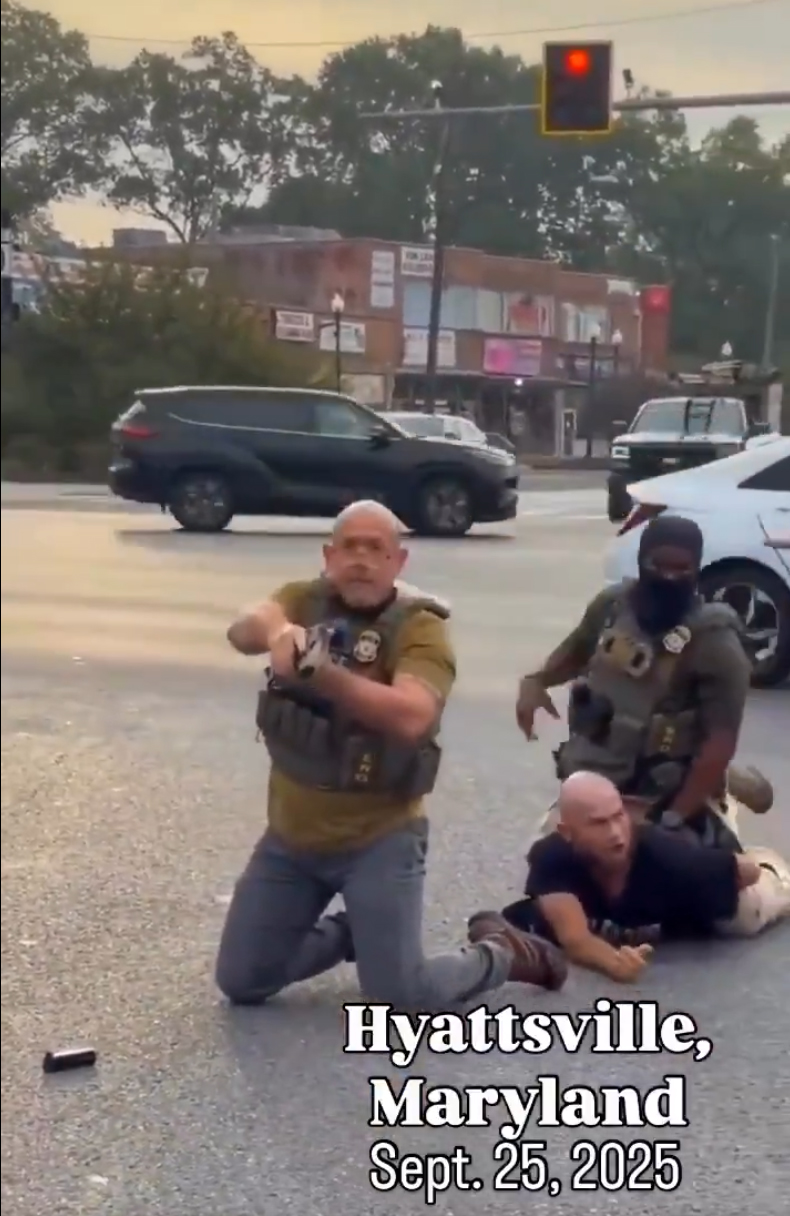
So I was horrified as I scrolled on Twitter (ok, X) last week to see a video of mayhem at a very familiar neighborhood location, the busy intersection of Queens Chapel Road and Hamilton Street. In the video, three men are struggling, one on the ground shouting “Help me!” and two others — one with a mask — punching and wrestling with the man on the ground. A closer look showed that the men on top wore heavy vests and soon I could see “ICE” on the labels.
And then, as I watched and to my horror, one of the ICE officers lunged for his gun that skittered onto the street, and as he reached out to grab it he appeared to be aiming it at the camera and bystanders. Who was this man threatening to shoot my neighbors? Why was the man on the ground being brutalized by what soon became many officers? How could this happen on an otherwise routine morning in a quiet suburban neighborhood?
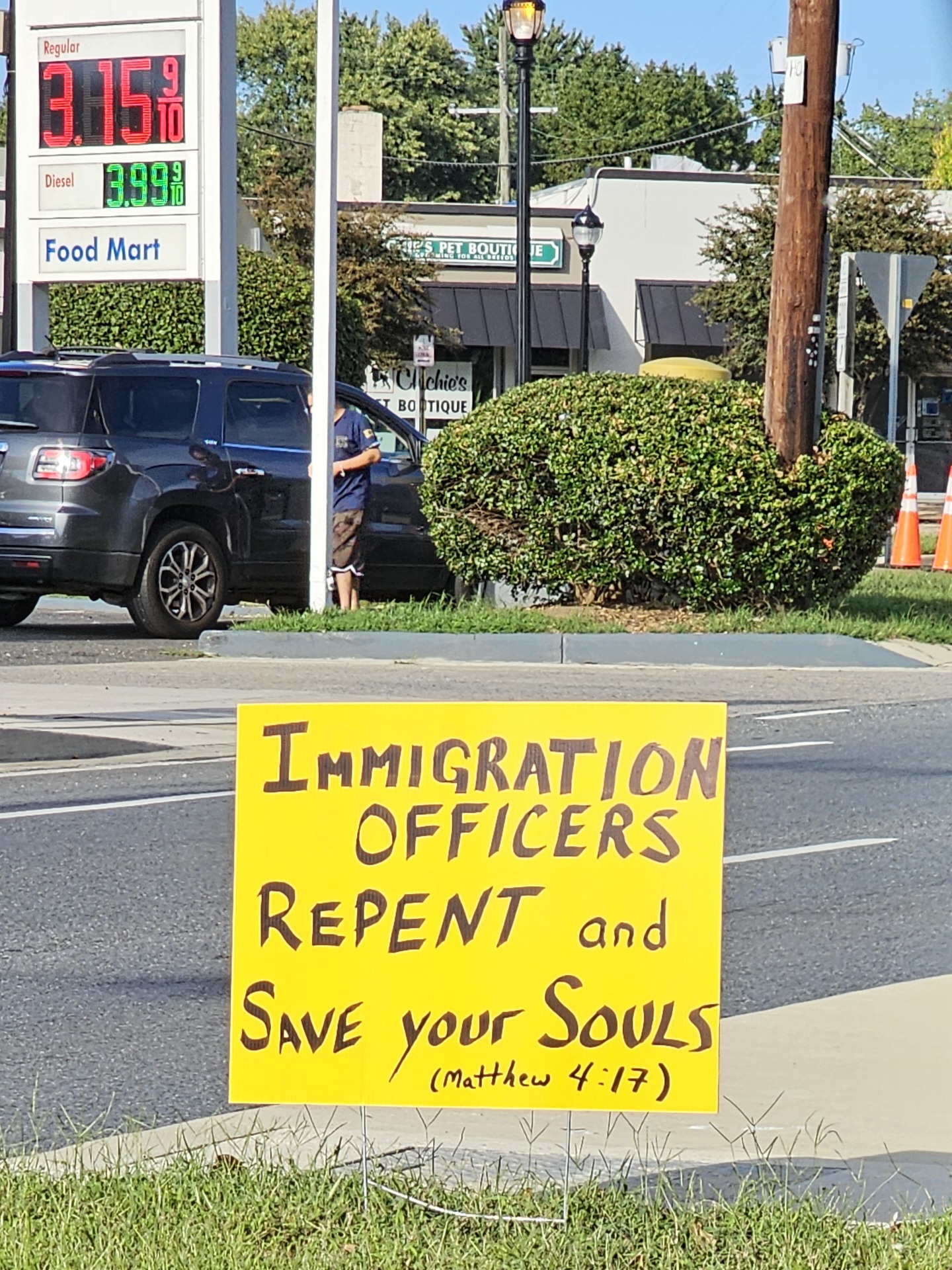
Homeland Security later said that the man on the ground was a “dangerous criminal” who was in the country illegally. Perhaps he was, but the brutality evident in the video was unjustified. The bystander who made the video said he and others felt that the ICE officer with the gun really might shoot them. Later on there were protests, signs planted on the grassy median on Queens Chapel, and a neighborhood ruptured in ways that will take a long time to heal.
The “war” against undocumented immigrants that the current political regime has undertaken does not make anyone one bit safer, and instead, it makes all of us feel in danger of harm, both physical and psychological. Every day now, it seems, we behold truly obscene videos and photographs of brutal masked men beating and dragging other human beings. The ruthless, brutal scenes of masked men with guns apprehending people are repeated every day all over the country.
These scenes are a shame and scandal to the America I once knew, a place that offered the promise of the American Dream to people all over the world, a place that believed in due process for the accused and human rights for all. Ok, maybe that seemed naive, but what we are witnessing today in the savage treatment of immigrants — or, in an increasing number of cases, people being “profiled” as immigrants because of their looks — is a complete betrayal of the founding principles and continuing purpose of the United States. What is happening is also an offense against human life and dignity, the most bedrock values of Christianity and many faiths.
I am sick to death of the monstrously offensive use of the term “illegals” — the dehumanization of people who came to this country seeking relief from violence and poverty is hideous. No human being is “illegal.” Yes, some do not have proper papers, and if our political leaders really wanted a solution, an easier pathway to citizenship should have been forged years ago. But not having papers does not make someone morally repugnant or deserving of abuse and disrespect.
Last Sunday, September 28, was also the 111th Observance of the World Day of Migrants and Refugees. A procession led by Auxiliary Bishop Evelio Menjivar drew more than 1000 people through the heart of Washington.
Washington Cardinal Robert McElroy offered Mass and used the occasion to give a powerful homily setting forth the Church’s teachings on human life and immigration. His powerful words are worth reading in full (read: Cardinal McElroy’s Homily). He called what is happening in the United States today “…an unprecedented assault upon millions of immigrant men and women and families in our midst.”
Cardinal McElroy went on to declare that, “Our first obligation as a Church is to embrace in a sustained, unwavering, prophetic and compassionate way the immigrants who are suffering so deeply because of the oppression they are facing.”
Moreover, he stated, “We are witnessing a comprehensive governmental assault designed to produce fear and terror among millions of men and women who have through their presence in our nation been nurturing precisely the religious, cultural, communitarian and familial bonds that are most frayed and most valuable at this moment in our country’s history. This assault seeks to make life unbearable for undocumented immigrants.” To those who say that undocumented immigrants broke the law, the Cardinal replies with the Gospel of the Good Samaritan who did not let law and custom stop him from helping the suffering man.He goes on: “The piercing insight and glory of the Samaritan was that he rejected the narrowness and myopia of the law to understand that the victim he was passing by was truly his neighbor and that both God and the moral law obligated him to treat him as neighbor.”
In a later interview with WTOP news radio, the reporter asked the Cardinal if he got pushback for wading into politics. Cardinal McElroy replied, “For us in the church, it’s part of morality and the social teaching of the Catholic Church, and so when people are suffering, we have to speak to that question. Major political issues often have moral dimensions…for the Catholic Church, this isn’t precisely a political issue. The church has no political role. It has a moral role in speaking to the moral dimensions of political questions, in terms of defending others, especially the poor and the vulnerable and those who are being oppressed.”
On Monday, Pope Leo also condemned the inhuman treatment of immigrants in the United States, pointing out the hypocrisy in claiming to be “pro-life” while approving of cruel and brutal treatment of immigrants. The leadership of our Church officials in expressing solidarity with immigrants is a model for all of us to emulate.
Trinity students, faculty and staff are all concerned about these issues, and we look forward to raising up more discussions and learning opportunities on these points. On Friday, October 24, Trinity is hosting a special symposium on Social Justice. Entitled “From Leo XIII to Leo XIV: A Century of Social Justice Shaping Trinity,” the program will include panels and speakers addressing the meaning of the Church’s teachings on social justice and how we interpret current moral and social issues in light of those teachings. We will have a panel on immigration as part of that symposium, and we are eager to welcome alumnae, faculty, staff and students to the program. I will publish more information on this symposium in the days ahead.
